The hypercar is the most extreme category of road car. These are machines that exist at the absolute frontier of what engineering and regulatory frameworks permit on public roads – cars that cost millions of dollars, that produce power figures previously the preserve of racing machinery, and that push the boundaries of aerodynamics, materials science, and powertrain technology simultaneously.
Understanding how the hypercar came to be what it is today requires tracing the evolution from the first cars that claimed the title to the present generation of hybrid and electric machines.
Before Hypercar: The Supercar Era
The term “hypercar” as distinct from “supercar” became useful because there needed to be a word that separated cars of genuinely extraordinary performance from the merely very fast. The Lamborghini Miura of 1966 is often cited as the first supercar – a mid-engine, high-revving, beautiful machine that set the template that exotic car manufacturers have followed ever since.
Through the 1970s and 1980s, the supercar template was refined. The Ferrari 308 and 348, the Lamborghini Countach, and the Porsche 911 Turbo defined what a high-performance road car could be. The Countach in particular established the visual language – mid-engine, rear-wheel drive, aggressive aerodynamics, scissor doors – that became shorthand for exotic car design.
The First Hypercars
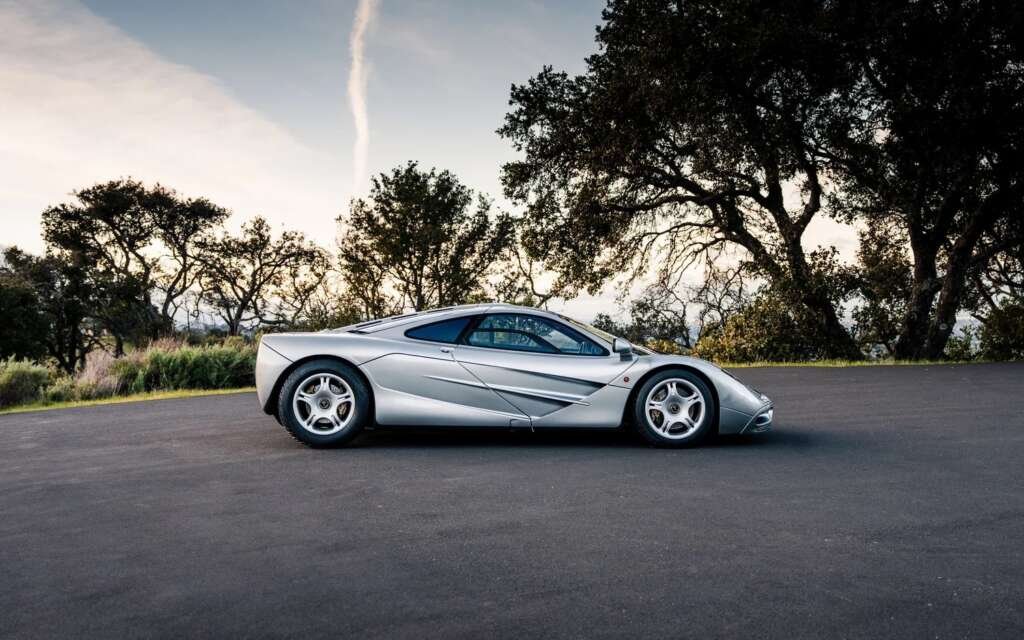
The McLaren F1 of 1992 is widely regarded as the car that defined the hypercar category. At the time of its launch, the F1 was the fastest production car ever built, with a top speed of 386 km/h from a naturally aspirated 6.1-litre V12. Gordon Murray’s design prioritised lightness – the car’s carbon fibre construction and gold-foil engine bay insulation were engineering commitments to a single purpose.
The F1 also introduced design elements that defined hypercars: the central driving position (driver seats in the middle, with passengers on each side), the extreme attention to aerodynamic efficiency, and the willingness to sacrifice everyday usability for performance purity.
The Bugatti Veyron and the Horsepower Race
The Bugatti Veyron of 2005 introduced the second defining element of the hypercar era: the 1,000 hp threshold. The Veyron was the first production car to reach 1,000 hp from its quad-turbocharged W16 engine, and the 400 km/h top speed was a production car record.
The Veyron’s approach was entirely different from the McLaren F1’s. Where the F1 was about lightness and purity, the Veyron used brute force – ten cooling radiators, four turbochargers, an all-wheel-drive system – to achieve its performance. The Veyron was heavier than many SUVs, but it was faster than any production car that preceded it.
The Holy Trinity and the Hybrid Era
The McLaren P1, Ferrari LaFerrari, and Porsche 918 Spyder of 2013 established hybrid technology as the defining characteristic of the modern hypercar. All three used combustion engines supplemented by electric motors to exceed 1,000 combined horsepower. All three set benchmark lap times. All three changed what buyers expected from a hypercar.
The hybrid approach continued with the Bugatti Chiron and its 1,500 hp, the Koenigsegg Jesko with its 1,600 hp on E85, and the Rimac Nevera – the first fully electric hypercar to claim the performance crown.
The Current Generation
The Bugatti Tourbillon’s V16/hybrid combination represents the most sophisticated combustion-based hypercar ever built. The Koenigsegg Jesko’s Light Speed Transmission is an engineering achievement without precedent. The Rimac Nevera’s 1,408 kW from four electric motors produces the fastest production car acceleration ever measured.
The current hypercar landscape is defined by the convergence of combustion and electric technology, aerodynamic sophistication derived from Formula 1, and manufacturing techniques that blur the line between road car and racing machine.
The Future
The hypercar will continue to evolve with the technologies available. Full electric powertrains will eventually dominate, though the timeline is uncertain. The performance ceiling continues to rise – not because it needs to, but because each generation of hypercar manufacturers chooses to challenge what the previous generation established as limits.
The hypercar’s essential character – extreme performance, extreme cost, and the absolute expression of what is technically possible – will remain constant through whatever technological transitions occur.
Side-by-side specs, Australian pricing and performance figures for every exotic and luxury car we cover.